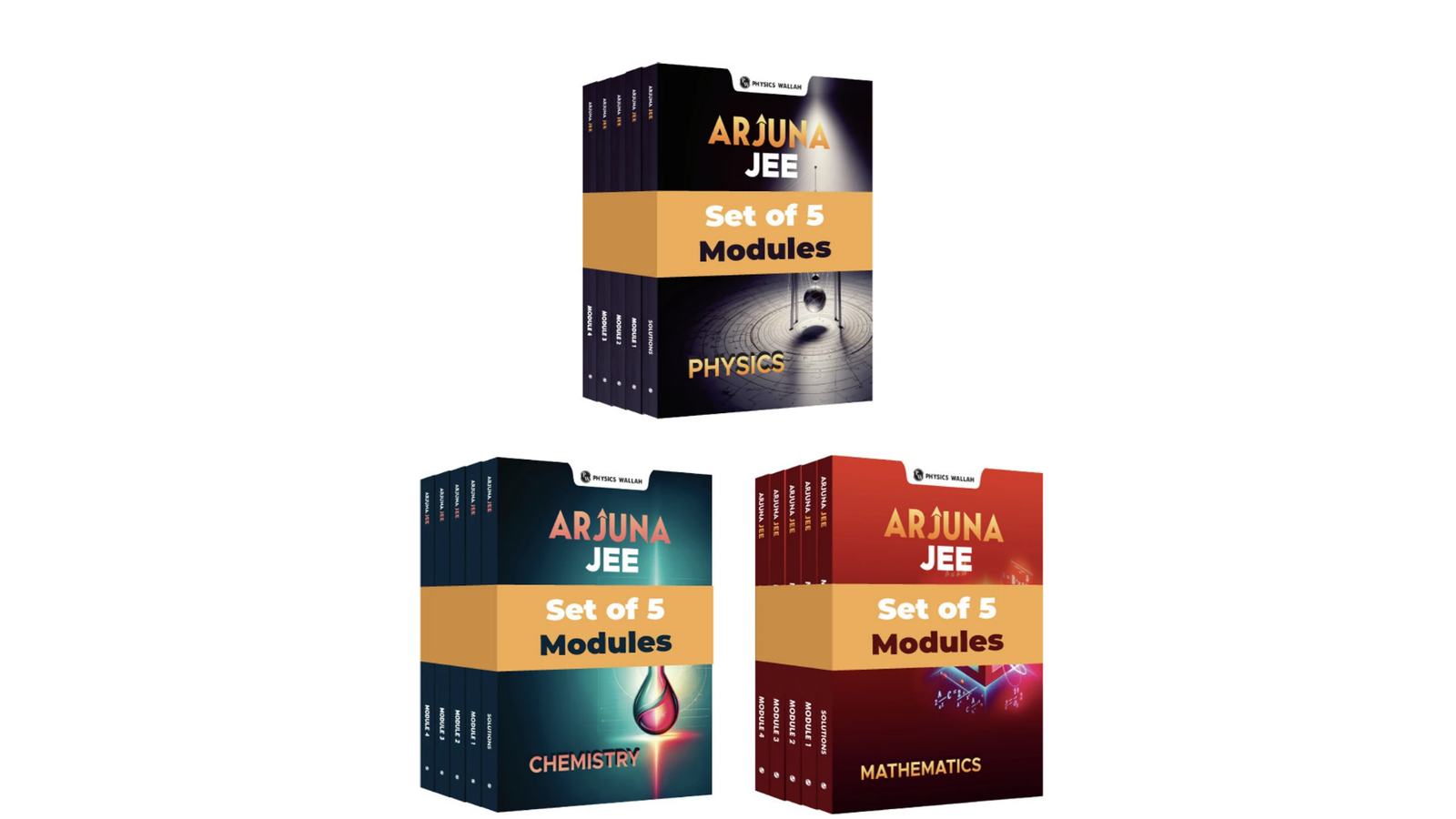
Arjuna JEE Modules full new condition
Author: pw
Category: Exam Preparation
₹1,550.00
Save ₹109 vs Amazon (est.)
Genuine book guaranteed. Full refund if not as described.
Same-day delivery if seller is in your city.
Delivery Available All Over India
500+ cities covered
Why buyers trust Bookaao
Your money is safe until the book is in your hands
1
Search & Find
Pick your book
›
2
Pay Bookaao
Safe escrow hold
›
3
Book Delivered
To your door
›
4
You Confirm
Then seller gets paid
Bookaao Buyer Protection — always on
We hold your payment in escrow. Seller only gets paid after you confirm the book arrived in the described condition. Problem? Full refund within 3 days.
Verified Sellers
Every seller is ID-checked before listing
Normal & Fast Delivery
Same-day in your city or 3–5 days pan-India
500+ Cities
Pan-India — Kashmir to Kanyakumari
Built for India's students — serving the real strength of Bharat, one book at a time 🇮🇳
Price Comparison
Compare prices and delivery times
Platform
Price
Delivery
Bookaao
Best Price!
₹1,550
Within 6 hours
Amazon
₹1,659
2-7 days
Flipkart
₹1,665
2-7 days
Book Details
Weight
5.50
Book Description
- # Arjuna JEE Modules – A Detailed Review Arjuna JEE Modules are study materials designed primarily for students preparing for the Joint Entrance Examination (JEE) during Class 11.
- They are widely used by students enrolled in the Physics Wallah (PW) Arjuna batches, although many self-study aspirants also purchase them separately.
- The modules are intended to provide a structured learning path by combining theory, solved examples, practice questions, previous year questions, and revision exercises into a single package.
- Their objective is to reduce the need for multiple books during the initial stages of preparation and help students build a strong conceptual foundation.
- One of the biggest strengths of the Arjuna JEE Modules is their organization.
- Every chapter begins with a detailed explanation of concepts.
- Instead of directly introducing formulas, the modules explain the logic behind them.
- This approach is especially useful for students who are studying topics for the first time.
- Important definitions, derivations, diagrams, and examples are included to improve understanding.
- The language is simple and student-friendly, making it accessible even to beginners.
- After the theory section, the modules provide solved examples.
- These examples demonstrate different approaches to solving problems and help students understand how concepts are applied in examinations.
- The solutions are generally written step by step, allowing students to identify where they may make mistakes.
- This section acts as a bridge between learning theory and solving questions independently.
- The practice questions are arranged in increasing order of difficulty.
- The initial exercises focus on strengthening fundamental concepts through straightforward problems.
- As students progress, the level gradually increases to include moderate and challenging questions.
- This progression allows learners to develop confidence before attempting more difficult problems.
- The modules also contain mixed exercises that combine multiple concepts from the chapter, encouraging analytical thinking.
- For Physics, the modules cover topics such as Units and Dimensions, Kinematics, Newton's Laws of Motion, Work, Energy and Power, Circular Motion, Gravitation, Properties of Matter, Thermodynamics, Oscillations, Waves, Electrostatics, Current Electricity, Magnetism, Optics, and Modern Physics, depending on the class and volume.
- The questions include both numerical and conceptual problems, which are essential for JEE preparation.
- In Chemistry, the modules are divided into Physical, Organic, and Inorganic Chemistry.
- Physical Chemistry chapters include numerical practice and formula-based questions.
- Organic Chemistry emphasizes reaction mechanisms, conversions, and conceptual understanding.
- Inorganic Chemistry contains theory, factual information, exceptions, and multiple-choice questions to improve retention.
- The balanced coverage of all three branches makes the Chemistry modules comprehensive.
- The Mathematics modules include chapters such as Sets, Functions, Trigonometry, Quadratic Equations, Sequences and Series, Permutations and Combinations, Binomial Theorem, Coordinate Geometry, Calculus, Probability, and Vectors.
- Questions range from basic applications to advanced multi-concept problems.
- Students gradually develop problem-solving speed and mathematical reasoning through repeated practice.
- Another valuable feature of the Arjuna Modules is the inclusion of Previous Year Questions (PYQs).
- Solving PYQs helps students understand the actual pattern and difficulty level of JEE Main and JEE Advanced.
- It also familiarizes them with recurring concepts and frequently tested topics.
- Many teachers recommend revising PYQs multiple times because they provide insight into the examination trend.
- The modules also include chapter summaries, important formulas, key concepts, and revision exercises.
- These sections are particularly useful before tests or during final revision.
- Instead of reading the entire chapter again, students can quickly revise important points through concise notes and formula sheets.
- The quality of printing, diagrams, and layout is generally good.
- The content is presented clearly with adequate spacing, making it comfortable to study for long hours.
- Important notes and tips are highlighted so that students can identify crucial information quickly.
- Diagrams in Physics and Chemistry are printed neatly, which improves conceptual understanding.
- One major advantage of these modules is that they align closely with the lectures conducted in the Arjuna batches.
- Students attending these classes can directly solve the corresponding module after completing each lecture, ensuring immediate reinforcement of concepts.
- This synchronization between lectures and study material improves learning efficiency and reduces confusion.
- However, like any study material, the modules also have certain limitations.
- Students aiming for the highest ranks in JEE Advanced, such as under AIR 500, may eventually require additional advanced problem-solving resources.
- While the modules provide a strong conceptual foundation, extremely difficult and research-oriented problems found in some advanced books may not be covered extensively.
- Therefore, after completing the modules thoroughly, students may choose to practice additional advanced questions if their preparation level demands it.
- Another common mistake students make is collecting multiple books before completing the modules.
- This often leads to incomplete preparation and unnecessary stress.
- The Arjuna Modules are designed to be comprehensive enough for regular study.
- Completing every exercise, revising the concepts, and analyzing mistakes is usually far more beneficial than solving a few questions from many different books.
- For self-study students, the modules can also be effective, provided they have access to good lectures or reference material to understand difficult concepts.
- The structured progression from theory to advanced practice makes them suitable even without classroom coaching, although consistent discipline is essential.
- To make the best use of the modules, students should first study the theory carefully, then solve the solved examples without looking at the solutions.
- After that, they should attempt all practice exercises, mark difficult questions, revise mistakes regularly, and solve previous year questions repeatedly.
- Weekly revision and periodic mock tests further strengthen retention and improve examination performance.
- Overall, the Arjuna JEE Modules are among the better study resources available for Class 11 JEE preparation.
- They offer balanced theory, quality practice questions, previous year questions, revision material, and a logical progression of difficulty.
- For most students targeting JEE Main and a good rank in JEE Advanced, these modules provide a strong foundation.
- Their effectiveness ultimately depends on consistency, regular revision, and sincere problem-solving rather than simply owning the material.
- Students who complete the modules thoroughly, revise them multiple times, and supplement them with mock tests are likely to develop the conceptual understanding and problem-solving skills necessary to perform well in one of India's most competitive engineering entrance examinations.
Vendor Information
Verified Seller
P
Priyanka x Bookaao
1
Books Listed
1
Orders Completed
₹1,785
Total Sales
Jee and Neet (BYJUS) BOOKS
₹522.50

Pw jee pyqs book
₹416.96
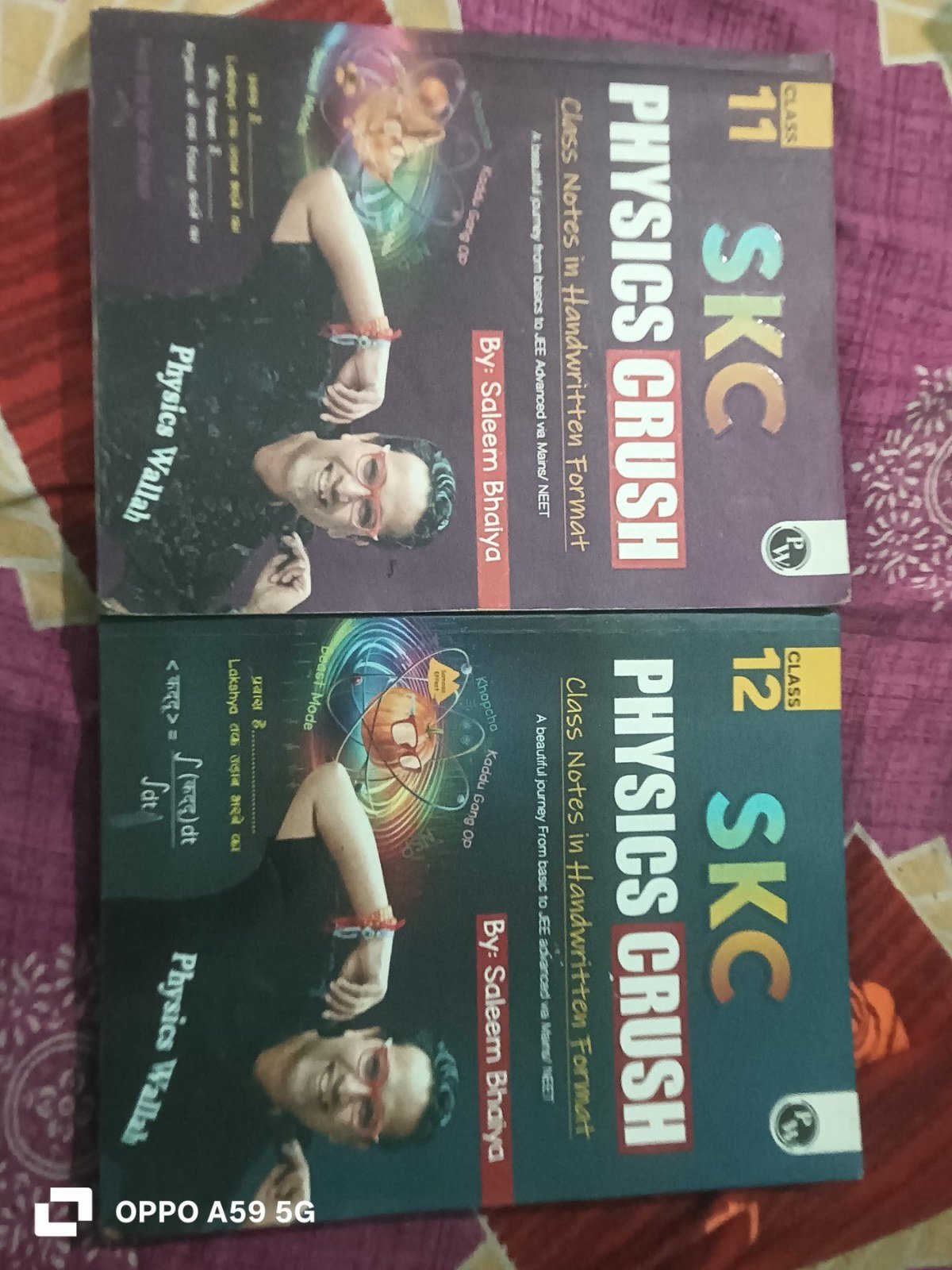
Skc class 11+12 jee book
₹834.96

Mathanogo jee book
₹521.46
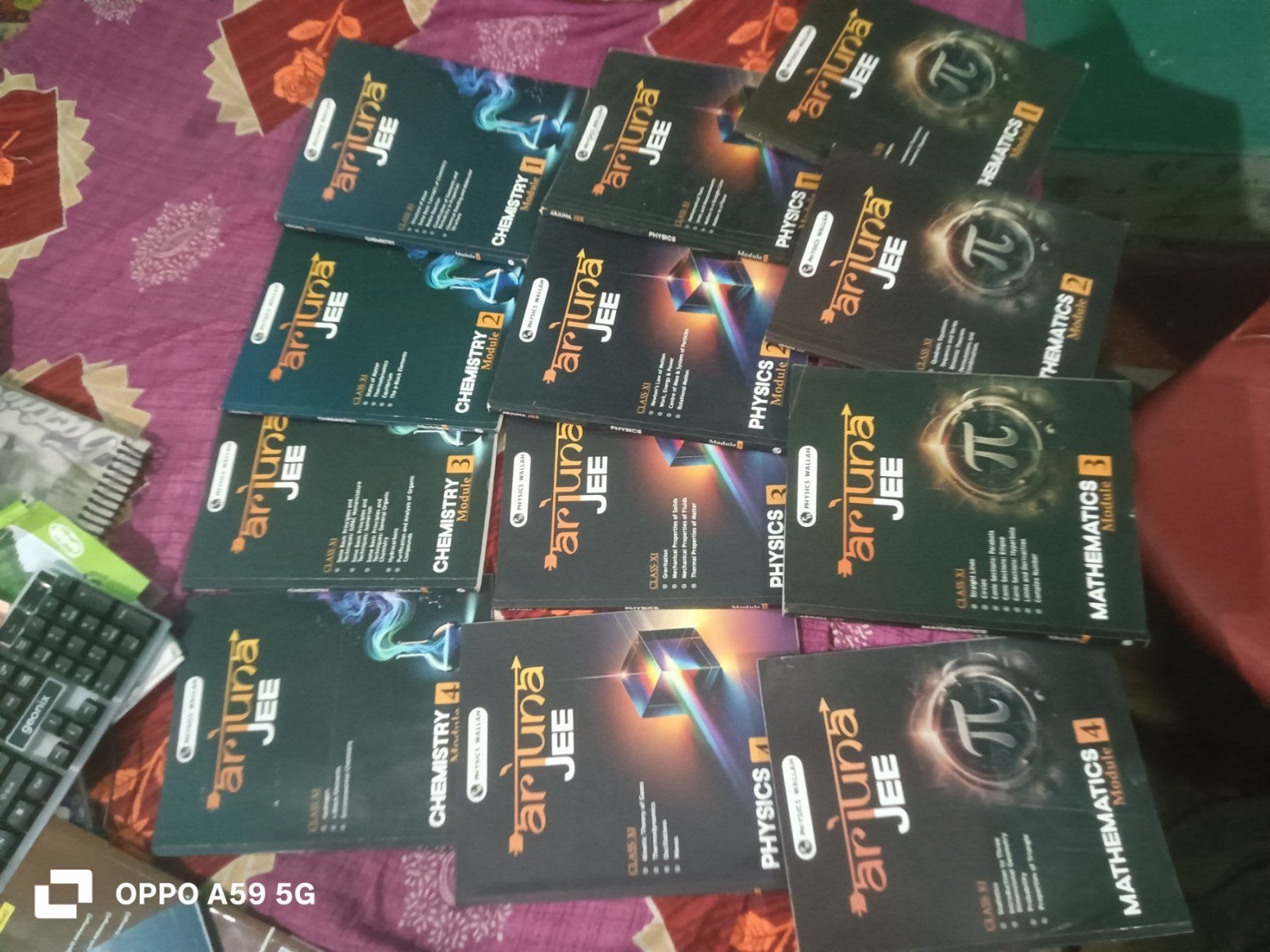
Pw class 11 jee modules
₹834.96
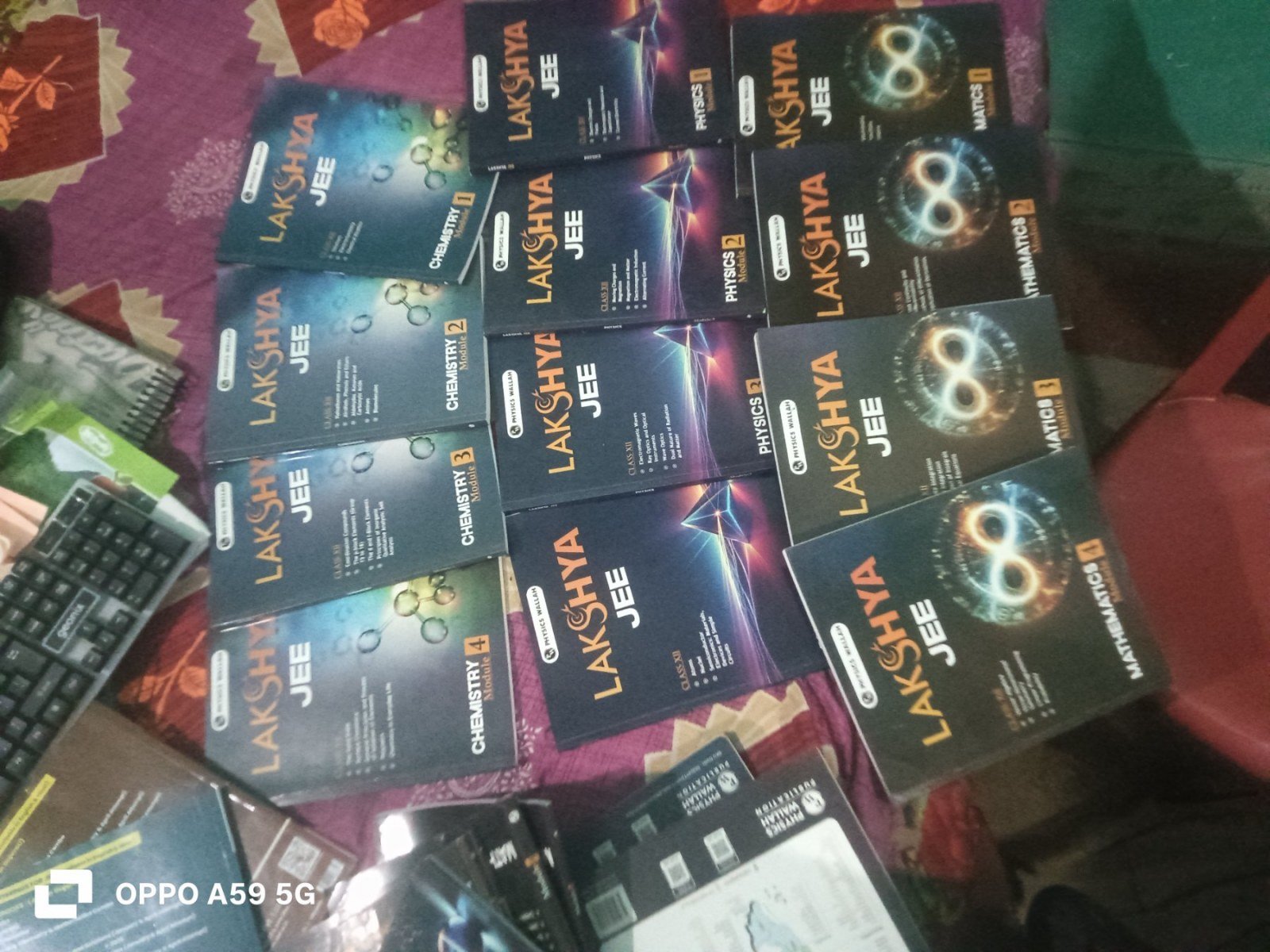
PW Class 12 lakshya jee module 2026-27
₹1,043.96

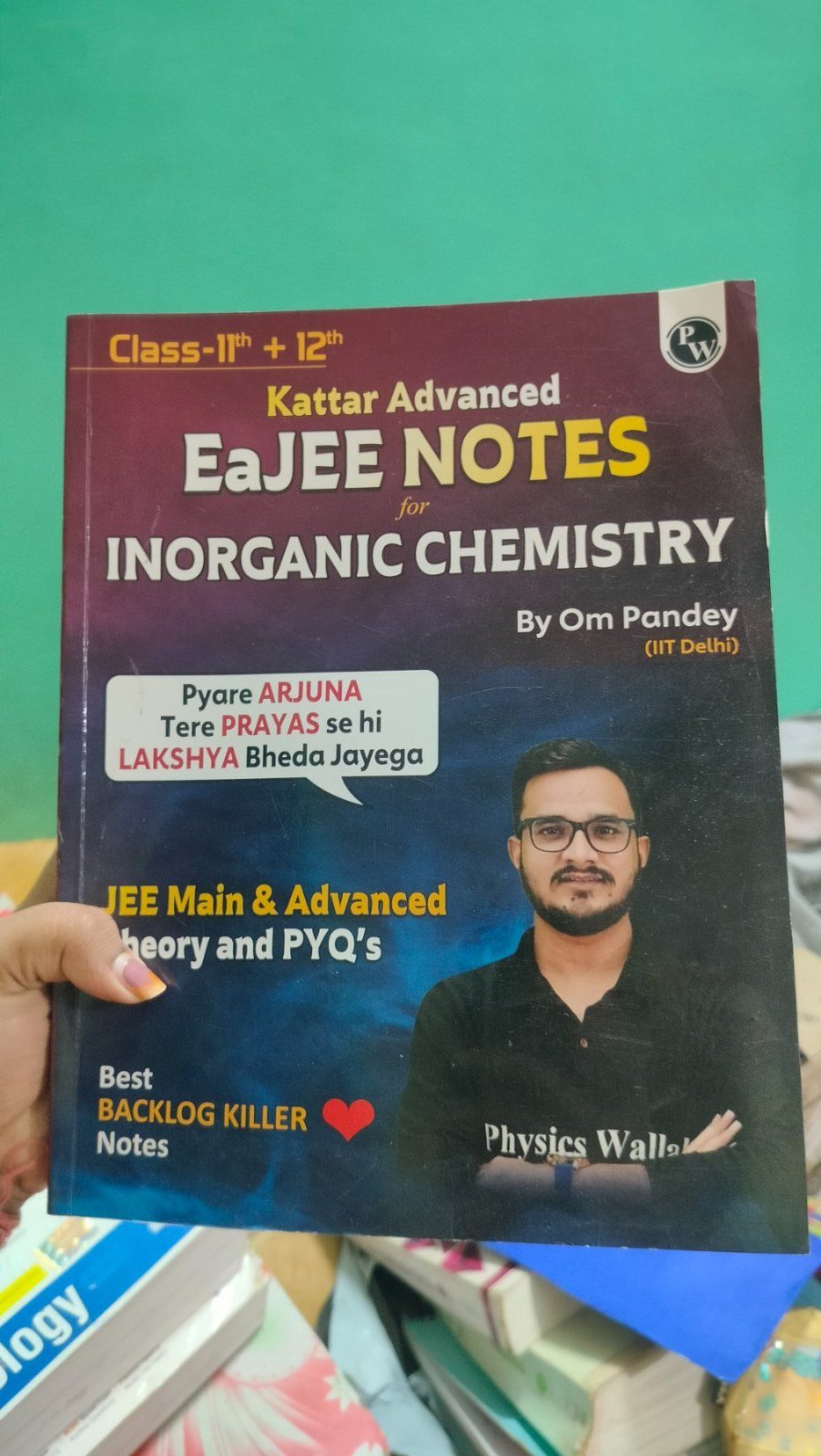
PW Kattar Advanced EaJEE Notes
₹209.00